Coral Gables by iPhone: Another Miracle? Mile View

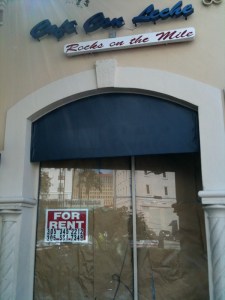
IMG_0393

The City’s View of What Happened: This Deserves Some Comments

From today’s Coral Gables email letter to residents:

City Of Coral Gables Budget Is Approved

On September 29, the City of Coral Gables adopted a budget for fiscal year 2009-2010 which began October 1, 2009 and ends on September 30, 2010. The total budget for this new fiscal year is $147,111,960 — a $2,514,563 decrease when compared to the previous year’s budget of $149,626,523. The City was able to reduce its budget despite significant increases to its operating costs which include rising pension costs and utility rates, among other necessary expenditures. The millage rate, which funds a portion of the budget, was set at 5.895 per $1,000 of taxable value. It’s lower than the rate of 6.150 mills the City had for fiscal year 2007. The current budget is not the cure to all of the City’s financial issues, therefore further belt-tightening and other changes are necessary. Coral Gables, like virtually every city in the United States, is coping with significant financial difficulties. This year is probably the most challenging for cities in a generation.

Employees are working harder to provide quality services with fewer people. Approximately 70 full-time positions were eliminated leaving the City with approximately 800 employees – that’s the fewest number of employees in more than 20 years. As part of the budget, management, professional and technical employees are contributing an additional 5% to the pension system for a cost reduction of approximately $500,000. Firefighters received a 5% pay cut along with other reductions in compensation for a total savings to the City of approximately $1,100,000. Police began contributing 5% of their pay to the pension system. Their pension contribution along with other significant concessions will in the future save the City approximately $1,500,000 annually. Negotiations with the union representing general employees are ongoing.

At 5.895 mills, Coral Gables has one of the lowest rates in Miami-Dade County. Furthermore, out of the total amount of property taxes you pay to the Miami-Dade County Tax Collector’s Office, 38% is directed to the Miami-Dade County Public School System, 32% is directed to Miami-Dade County, 27% goes to the City of Coral Gables and the balance is sent to the State. While the budget has been adopted, the City will continue to evaluate its operations as we strive to preserve the high standards, quality of life and beauty that make Coral Gables a special place.

Taxes Rise, A Little or A Lot

when property values rise,

property taxes rise.

when property values fall,

property taxes rise.

when property values stagnate,

property taxes rise.

buy a new house,

property taxes rise.

live long in an old house,

property taxes rise, just a little.

buy a new house,

property taxes rise, just a lot.

you are an old commissioner, your taxes rise, just a little

you a new resident, your taxes rise, just a lot.
The Kerdyk Tax

This is just a bit of history for our citizens.

On September 30, the City Commission of the City of Coral Gables passed a property tax millage increase of 5. 895 (a technical name for a tax rate per 1000 units) that is a 12 percent higher rate than last year.  During the budget debate, Vice Mayor Kerdyk suffered publicly through several iterations of what he said he would and would not accept.   Commissioner Cabrera indicated he would only accept the TRIM rate (the rate that would produce the same total tax revenues as the previous year) of 5.65; and the Vice Mayor wanted a rate 5.795, more or less between the upper end proposed by the Mayor/City Manager of 6.10 initially and 5.995 later, and the lower TRIM rate.  No one dared to mention last year’s actual millage rate of 5.25.  Also, the City Manager (reading between the lines) threatened to shift the blame for future financial problems and the firing of police officers to Messrs. Kerdyk and Cabrera, which caused them great consternation. The initial “Mayor/City Manager millage rate” would have represented about a 20 percent increase in property taxes.  The minimum TRIM rate in itself represented on the order of a 7.6 percent tax increase in taxes, and a tax on no small number for people on fixed incomes, declining property values, slow businesses, unemployed and those with a questionable ability to pay their bills (including mortgages, taxes and insurance).

But good taxpayers and (the many fewer actual) voters should note for the history books:

  • Not a single commissioner was willing to hold the line on last year’s tax rates;
  • Property taxes were ultimately increased by 12 percent, being one of the few municipalities that has been able to squeeze its taxpayers hard during an economic crisis (apparently because of voter apathy);
  • Nevertheless, Messrs. Kerdyk and Cabrera wanted, at the very least, to increase taxes by 7.6 to 10 percent;
  • Messrs. Kerdyk and Cabrera urgently needed to shift the blame for the final tax increase to someone, and that someone was the City Manager Salerno;
  • Mr. Kerdyk should thank Mr. Salerno for concocting a budget that threatened to gut public safety services (with any number of police officer position reductions) and this gave Kerdyk and Cabrera an excellent excuse to raise taxes above the TRIM rate.  (This is the 9/11 effect since the politicians who don’t approve wars and anti-terrorist measures are blamed for all future terror attacks.  Thus every future crime will be blamed on Messrs. Kerdyk and Cabrera should they vote to lower taxes too much.);
  • Mayor Slesnick and Commissioners Anderson and Withers were anxious to increase the millage rate as high as politically possible to 20 percent;
  • But ,simultaneously with the budget discussion, the Mayor and Commissioners Anderson and Withers approved a new fire fee on residences and commercial properties that will raise between $1.5 and $2.0 million annually and it can be increased each year without further community consultation.  (That is the Biltmore Fee since the fire fee will try to cover the failure of the Biltmore to pay its debts to the city.)
  • Hence, the real tax increase (including the fire fee) was quite close to the “Mayor/City Manager rate” of 5.995 after all!

This has been a story of political theater in the City of Coral Gables.