Coral Gables by iPhone: Miracle Mile (300 Block)
October 6, 2009 Leave a comment
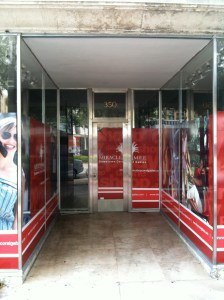
Some unpleasant and sad views of empty businesses or unfinished construction on Miracle Mile (300 Block).


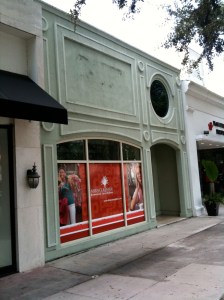
Coral Gables Environment, Politics and Government
October 6, 2009 Leave a comment
Some unpleasant and sad views of empty businesses or unfinished construction on Miracle Mile (300 Block).
October 2, 2009 Leave a comment
I cite an article on the Coral Gables website dated 4/15/2004 that indicates that city authorities surveyed comparative public safety wage salaries in the region and found that Coral Gables paid in the top ranges. Some commissioners argued in the recent budget hearing that Coral Gables was forced into paying higher salaries because the city was at a disadvantage in attracting public security personnel. The following clearly suggests that Coral Gables was already paying at the highest salary ranges and that the city negotiated even higher wages than necessary.
A recent comparison of police officers and firefighter salaries (and pension contribution) among all muncipalities in Dade and Broward counties, based on proposed wage increases and on firgures provided by unions, place Coral Gables police officers and firefighters in the top starting salary ranges, as compared to other public safety agencies.
…
City negotiators have offered both unions an 8 percent wage increase, offset by a five percent employee pension contribution over a two-year period. The City has also agreed to annual merit increases (from 3 to 5 percent)…
October 2, 2009 1 Comment
In response to comments on a previous post, I have endeavored to find information about salaries, wages and benefits in Coral Gables and comparative full service cities. Detailed information on salaries and benefits are not easily obtained. The most recent information indicates a few interesting comparative facts.
The Coral Gable’s 2009-2010 initial proposed budget indicated average costs of $118,300 per employee. The average pension costs are $23.5 million in addition to wages ($58.9), pension costs, FICA, workers comp., and sick leave adding up to $97.8 million out of total budget of around $155 million, or more than 60% of the total budget (that were subsequently changed in millage rate negotiations).
Based on 2007 comparative information (source: http://www.City-Data.com) there indicates that police and firefighters wages in Coral Gables are consistently above those in Key Biscayne, Miami Beach, the City of Miami, West Palm Beach and Fort Lauderdale. The average firefighter earns $95,661 in Coral Gables; compared to $77,685 in Key Biscayne; $91,503 in Miami Beach; $85,569 in the City of Miami; West Palm Beach $76,718; and $40,978, Fort Lauderdale. Similarly for police officers, the salary in Coral Gables is $77,547, compared to $75,404 in Miami, $73,741 in Key Biscayne; the much larger $96,165 in Miami Beach; 79,155 in West Palm Beach; and Fort Lauderdale, $79,696. It is assumed that these rates do not include pension benefits.
Average wages in government are as follows: Coral Gables, $67,595; Key Biscayne, $71,215; Miami, $64,576; Miami Beach, $63,709; West Palm Beach, $60,553 and Fort Lauderdale, $55,062. These data do not take account benefits that greatly add to average wage costs.
One may conclude that Coral Gables wages are generally above the average compared to other full service cities, although there are some specific differences. One wonders why Coral Gables would have to pay in the highest range of salaries given the relatively good working conditions and residential environment in City Beautiful. The higher wages and benefits, therefore, are due to additional factors such as the leverage of local unions, their involvement in local elections and the relative apathy of local voters and taxpayers as well as the abundance of tax revenues in recent years. Also, other cities were making the same mistake as Coral Gables of pushing up wages and benefits in good budget times.